

Wondering exactly what is rosacea? It is a chronic disease and skin condition causing persistent facial redness, visible blood vessels, and occasional acne-like bumps. While there is no cure, understanding your triggers and managing flare-ups with proper care can keep inflammation down and help you maintain clear, calm skin.
What Does Rosacea Look Like?
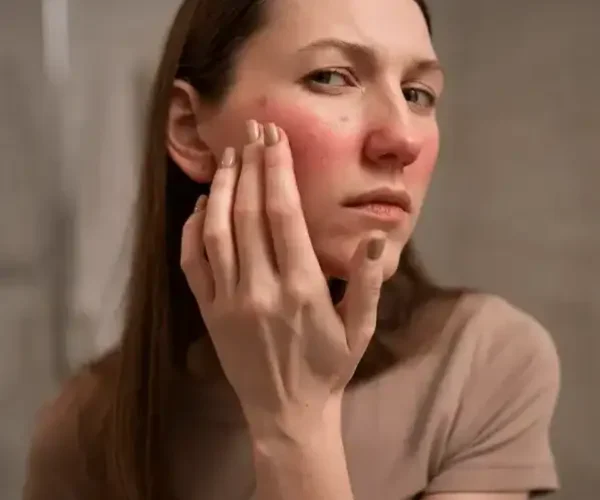
If you have started noticing unexplained changes in your complexion, you might be asking yourself: what does rosacea look like? For most people, it begins as a subtle flush that seems to last a little longer than usual.
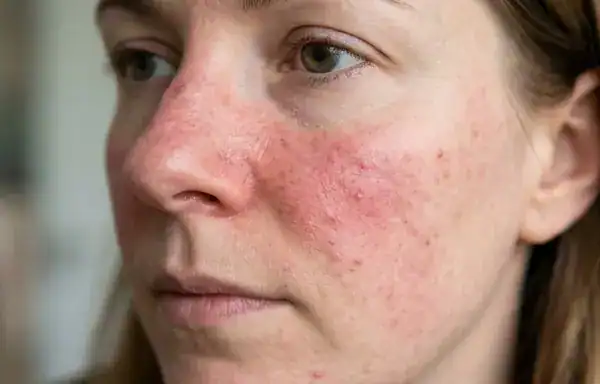
Typically, rosacea on face presents right in the center. You will see a concentration of color spreading across the nose, cheeks, forehead, and chin. As the condition progresses from its early stages, the redness deepens. Early rosacea symptoms often mimic a mild sunburn or a natural blush. Over time, the redness can become more persistent, especially if left untreated.
Some people develop visible blood vessels. These tiny red lines, medically known as telangiectasia, appear just beneath the surface of the skin, giving the face a webbed or irritated appearance. In more advanced cases, small red bumps or pus-filled pustules develop, which is why many people confuse the condition with regular breakouts.
Rosacea Symptoms (With Real-Life Examples)
Because this skin condition affects everyone differently, the signs of rosacea can vary widely from person to person. However, most individuals experience a combination of the following rosacea symptoms:
- Persistent Redness: This is the hallmark sign. Unlike a temporary blush from feeling embarrassed, this facial redness sticks around. It looks like a permanent patch of irritation on your cheeks and nose.
- Flushing Episodes: Many people experience sudden, intense waves of heat spreading across their face and neck. During these episodes, the skin turns bright red and feels incredibly warm to the touch. These are classic rosacea flare symptoms.
- Acne-Like Breakouts: Small, solid red bumps or pus-filled pimples can form. Unlike typical acne, these breakouts usually appear without blackheads and rest on a base of severely red, inflamed skin.
- Burning or Stinging: The skin often feels incredibly sensitive. Applying ordinary lotions, makeup, or even just washing your face with water might cause a sharp burning or stinging sensation.
- Dry Skin: Your face might feel tight, rough, and dry, despite regular moisturizing. The skin barrier is compromised and becomes sensitive, leading to a rough and scaly texture.
- Ocular Symptoms: Many people do not realize this condition can affect the eyes. Ocular rosacea symptoms include dry, bloodshot, irritated, and teary eyes. It often feels like you have a grain of sand stuck under your eyelid. Your eyelids may also become swollen and red at the base of your eyelashes.
What Causes Rosacea?
Patients often visit a skin care clinic asking, “what causes rosacea?” or “why does rosacea happen?” While researchers are still studying the exact mechanisms, medical experts agree that rosacea causes are usually a combination of several overlapping factors.
First, there is a strong link to abnormal inflammation and immune response. People with this condition seem to have an overly reactive immune system that triggers inflammation in the skin, leading to the characteristic redness and swelling.
Genetics also play a massive role. If your parents or grandparents had it, your chances of developing it are significantly higher. It runs in families, pointing to a strong hereditary component.
Finally, environmental factors and microscopic skin mites called Demodex are believed to contribute. While everyone has these microscopic mites living harmlessly on their skin, some people with rosacea have higher levels of these mites, which may contribute to skin irritation and inflammation, making the inflammation worse.
Common Rosacea Triggers
Managing the condition means knowing what causes rosacea flare ups for you personally. While triggers vary, most fall into a few specific categories. Identifying what triggers rosacea flare ups in your daily routine is the fastest way to reduce your symptoms.
Environmental Triggers
- Sun Exposure: Ultraviolet rays are the number one trigger for most people. Even a few minutes of unprotected sun exposure can cause a massive flare-up.
Heat: Hot weather, humid climates, saunas, and excessively warm indoor heating can all cause the blood vessels in your face to dilate, leading to immediate flushing.
Cold and Wind: Ironically, extreme cold and harsh winds can also strip the skin barrier and cause severe irritation.
Lifestyle Triggers
Stress: Emotional stress and anxiety trigger the body’s fight-or-flight response, which dilates blood vessels and leads to sudden facial redness.
Alcohol: Red wine is particularly famous for causing severe flushing, but beer, vodka, and other spirits can also cause rapid flare-ups.
Heavy Exercise: High-intensity workouts raise your core body temperature and increase blood flow to your face, making redness much worse. Read more about how exercise can make rosacea worse.
Dietary Triggers
Spicy Food: Foods containing capsaicin, like hot peppers, hot sauce, and certain curries, dilate blood vessels.
Hot Drinks: Coffee, tea, and hot chocolate can trigger symptoms simply because of their high physical temperature, which warms the body and face.
Histamine-Rich Foods: Aged cheeses, processed meats, and fermented foods can cause inflammatory reactions in sensitive individuals.
Skincare Triggers
Harsh Products: Astringents, toners containing alcohol, heavy fragrances, and rough physical exfoliants will strip the skin and cause immediate stinging and burning.
Learn more about What Should You Not Use On Your Face If You Have Rosacea? thru this blog.
Types of Rosacea
There is no single version of this condition. Dermatologists recognize four different types of rosacea, and it is entirely possible to experience more than one type at the same time.
1. Redness Type (Erythematotelangiectatic Rosacea - ETR)
This is the most common form. People with ETR experience persistent facial redness, frequent flushing, and visible blood vessels. The skin often feels hot, swollen, and extremely sensitive to the touch.
2. Acne-Like Type (Papulopustular Rosacea)
Often confused with adult acne, this type features constant redness accompanied by breakouts of red bumps and pus-filled blemishes. It is most common in middle-aged women. The skin may feel sensitive and can be dry or oily depending on the individual.
3. Thickened Skin Type (Phymatous Rosacea)
This is a rare form where the skin thickens and develops an irregular, bumpy texture. It most commonly affects the nose, causing it to become enlarged and bulbous—a condition known as rhinophyma. This type is much more common in men than women.
4. Ocular Rosacea
As mentioned earlier, this type affects the eye area. The eyes become watery, bloodshot, and highly sensitive to light. The eyelids may swell, and frequent styes can develop. Without proper treatment, ocular rosacea can eventually lead to corneal damage and vision problems.
Who Gets Rosacea?
You might be wondering who gets rosacea and if you fit the typical profile. While anyone can develop it, certain demographics are at a much higher risk.
It most frequently appears in adults between the ages of 30 and 50. It is incredibly common in people with fair skin, light hair, and blue or green eyes, particularly those with Celtic or Scandinavian ancestry.
Family history is a strong indicator. If you have a close relative with the condition, your likelihood of developing it goes up.
There are also distinct gender differences. Women are diagnosed much more frequently than men. However, when men do develop it, their symptoms tend to be far more severe, and they are significantly more likely to develop the thickened skin type (phymatous rosacea) on the nose.
Rosacea vs Acne vs Sensitive Skin
Because the symptoms overlap, figuring out if you have rosacea or sensitive skin, or determining if it is rosacea vs acne, can be confusing. Many people ask, is rosacea acne? The answer is no. They are entirely different conditions requiring completely different treatments.
Here is a simple breakdown to help you spot the differences:
| Feature | Rosacea | Acne | Sensitive Skin |
| Primary Redness | Concentrated in the center of the face; visible blood vessels. | Often centered around individual pimples or affected areas. | Generalized redness after using harsh products. |
| Breakout Type | Red bumps and pustules; no blackheads. | Whiteheads, blackheads, cysts, and nodules. | Rarely involves true breakouts unless heavily irritated. |
| Primary Triggers | Sun, heat, spicy foods, stress, alcohol. | Hormones, excess oil production, clogged pores. | specific skincare ingredients, fragrances, dyes. |
| Pain/Sensation | Burning, stinging, feeling hot. | Soreness around deep cystic pimples. | Itching, tightness, temporary stinging. |
How to Treat Rosacea (Step-by-Step)
If you are dealing with constant redness, finding the best treatment for rosacea is your top priority. While managing it takes time, the right approach can clear your skin and prevent future flare-ups. Here is exactly how to treat rosacea effectively.
If you are dealing with constant redness, finding the best treatment for rosacea is your top priority. While managing it takes time, the right approach can clear your skin and prevent future flare-ups. Here is exactly how to treat rosacea effectively.
Step 1: Avoid Triggers
The foundation of any rosacea treatment plan is trigger avoidance. Keep a daily journal of what you eat, what you apply to your face, and what the weather is like. When a flare-up happens, look back at your journal to identify the culprit. Once you know what makes your face flush, you can actively avoid those situations.
Step 2: Establish a Gentle Skincare Routine
Your skin barrier needs serious protection. Throw away rough scrubs, alcohol-based toners, and heavily fragranced lotions. Wash your face twice a day with a mild, non-foaming cleanser using only your fingertips. Pat your face dry with a soft towel—never rub. Follow up with a thick, calming moisturizer containing ceramides to help rebuild the skin barrier.
Most importantly, you must wear sunscreen every single day. Look for a mineral sunscreen containing zinc oxide or titanium dioxide, as chemical sunscreens can cause stinging.
Step 3: Medical and Medspa Treatments
If at-home care is not enough, a dermatologist or qualified skincare professional can recommend advanced treatments tailored to your condition. Options like prescription medications, laser therapy, and light-based treatments may help manage persistent redness and inflammation more effectively.
Topical Creams: Prescription creams containing metronidazole, azelaic acid, or ivermectin can massively reduce inflammation and clear up acne-like bumps.
Oral Medications: For severe flare-ups, low-dose oral antibiotics like doxycycline are frequently prescribed to quickly reduce deep inflammation.
Laser and Light Therapy: For visible blood vessels and background redness, laser treatments are the gold standard. Intense Pulsed Light (IPL) or Vbeam lasers target the red pigment in the blood vessels, gently heating and destroying them so the body can absorb them.
Can Rosacea Be Cured?
A very common question at any skin care clinic is: Is rosacea curable? The honest answer is that there is currently no permanent cure. It is a chronic condition that waxes and wanes over time.
However, do not let that discourage you. While it cannot be completely erased from your DNA, it is highly manageable. With the right combination of trigger avoidance, daily skincare, and professional medical treatments, most people can achieve long periods of clear, comfortable skin. You can absolutely live a normal, confident life without constant redness dictating your day.
When Should You See a Doctor?
If you suspect you have this condition, do not try to manage it entirely on your own. Over-the-counter acne medications will likely make the burning and redness much worse.
You should see a dermatologist or consult a dermatologist or qualified medical professional if:
- Your facial redness is persistent and causing you distress.
- Your skin constantly burns, stings, or feels painfully tight.
- You are developing acne-like bumps that do not respond to gentle care.
- Your eyes feel gritty, dry, or look chronically bloodshot.
Early intervention prevents the condition from progressing to more severe stages, including the permanent thickening of the skin on the nose.
Frequently Asked Questions
Is rosacea permanent?
The condition itself is a lifelong, chronic disease, meaning you will always have the underlying tendency to experience flare-ups. However, the visible symptoms—the redness, the bumps, and the flushing—are not always permanent. With dedicated, ongoing treatment and a solid skincare routine, you can keep symptoms well-controlled for long periods.
What foods trigger rosacea?
Dietary triggers vary by individual, but the most common culprits include hot beverages (coffee, tea), spicy foods (hot peppers, curry, hot sauce), alcohol (especially red wine and beer), and foods high in histamine (aged cheese, processed meats, fermented foods, and certain nuts). Keeping a food diary is the best way to determine your specific dietary triggers.
Can rosacea go away?
It typically does not go away completely without proper management. If left untreated, symptoms usually worsen over time, spreading wider across the face and becoming more intense. However, with consistent medical treatment, laser therapy, and lifestyle adjustments, the visible symptoms can improve significantly and may become barely noticeable, making it look and feel as though it has gone away.
Is rosacea dangerous?
Generally, it is not a dangerous or life-threatening condition. It is primarily a cosmetic and comfort issue that affects your quality of life and self-esteem. The one exception is ocular rosacea. If the condition spreads to your eyes and is left untreated, it can cause severe complications, including corneal ulcers and permanent vision loss. If you experience persistent eye irritation alongside facial redness, you should consult an eye doctor immediately.