


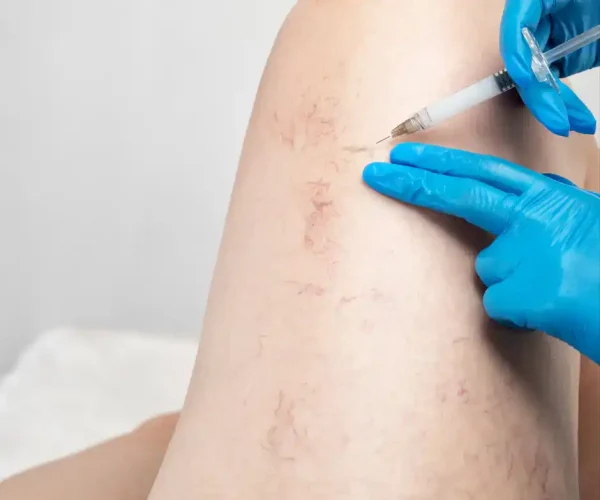
The fastest way to get rid of spider veins is typically sclerotherapy for the legs and laser vein removal for the face. Sclerotherapy involves injecting a solution that collapses the vein, showing noticeable improvement in a few weeks (3-6 weeks typically), with full results depending on the size and location of the veins.
Dealing with visible veins on your legs or face can be frustrating. You might notice small red, blue, or purple lines appearing right under the surface of your skin. If you are preparing for a vacation, a special event, or just want clearer skin, you are likely looking for the quickest method to clear up your complexion.
This guide covers everything you need to know about spider vein treatment, how different procedures work, and what you can expect during the recovery process.
What Are Spider Veins?
Spider veins, medically known as telangiectasias, are tiny, damaged blood vessels that appear close to the surface of the skin. They get their name from their appearance, which often resembles the intricate, branching shape of a spider’s web or the branches of a tree.
These veins are verycommon. They usually show up on the legs, specifically on the thighs, calves, and ankles. However, it is also very common to find them on the face, particularly around the nose, cheeks, and chin.
Unlike varicose veins, which are larger, bulging, and can be painful, spider veins are usually a cosmetic concern. They lay flat against the skin and do not bulge outward. While they are usually harmless, many people seek out spider vein treatment because they do not like how the veins look against their natural skin tone. Understanding what are spider veins is the first step toward finding the right method to clear them from your skin.
What Causes Spider Veins?
Before looking at treatments, it helps to understand why these tiny vessels become visible in the first place. The veins in your body contain one-way valves that help push blood back up to your heart. When these valves weaken, blood can pool in the vein. Over time, the pressure builds up, causing the tiny vessel walls to expand and become visible through the skin.
Several common factors contribute to the causes of spider veins:
- Genetics: A family history of vascular issues is one of the biggest risk factors. If your parents or grandparents had visible leg veins, your chances of developing them are much higher.
- Hormonal Changes: Fluctuations in hormones greatly impact vascular health. Puberty, pregnancy, and menopause all cause changes in the body that weaken vein walls. Using birth control pills or hormone replacement therapy also increases your risk.
- Prolonged Standing or Sitting: Occupations requiring long periods of standing, like nursing, teaching, or retail work, put extra pressure on the veins in the lower legs. Sitting at a desk all day produces a similar effect, as the lack of movement makes it harder for blood to flow upward.
- Aging: As we age, the valves in our veins naturally weaken, and the calf muscles that help pump blood lose some of their strength. The skin also becomes thinner, making underlying veins much easier to see.
- Sun Damage: For facial spider veins, prolonged exposure to ultraviolet rays is a major culprit. The sun breaks down collagen, thinning the skin and drawing tiny blood vessels closer to the surface.
- Excess Weight: Carrying extra body weight places additional pressure on the veins in your legs, forcing them to work harder to circulate blood.
What Is the Fastest Way to Get Rid of Spider Veins?
When you want fast spider vein removal, you need to rely on professional, in-office procedures. Creams and lotions simply do not work fast enough or penetrate deep enough to fix broken blood vessels. To get the fastest results, medical professionals rely on two primary methods: sclerotherapy and laser vein removal.
Sclerotherapy (Results in 3 to 6 Weeks)
For spider veins on legs, sclerotherapy is widely considered one of the most effective treatments A specialist uses an ultra-fine needle to inject a chemical solution, called a sclerosant, directly into the targeted vein.
This solution acts as an irritant. It aggravates the inner lining of the blood vessel, causing it to swell shut and block the flow of blood. Once the vein collapses, the blood reroutes through healthier, deeper veins nearby. Over the next few weeks, the collapsed vein turns into scar tissue and is naturally absorbed by the body.
Sclerotherapy is highly effective. A single session can eliminate a large cluster of veins. The procedure itself takes about 15 to 30 minutes, depending on the number of veins being treated. Patients often see significant fading within 3 to 6 weeks.
Laser Vein Removal (Results in Weeks to Months)
If you have spider veins on your face, laser vein removal is generally the fastest and safest approach. Skin on the face is delicate, and injecting chemicals into facial veins carries higher risks.
During a laser treatment, a specialist directs highly concentrated bursts of light into the vein. The pigment in the blood absorbs this light, which converts into heat. The heat damages the vein, causing it to shrink and eventually dissolve.
Because no needles are involved, this method is highly appealing to many patients. Surface laser treatments work incredibly fast for tiny facial veins, often showing dramatic improvement in just a few weeks. For larger veins on the legs, lasers can take several months to produce full results, which is why doctors often prefer injections for the lower body.
Sclerotherapy vs Laser: Which Is Faster and Better?
Choosing between these two options depends entirely on the size, location, and severity of your veins. When comparing laser vs sclerotherapy spider veins treatments, looking at the data side-by-side helps clarify which path is better for your specific situation.
Feature | Sclerotherapy | Laser Vein Removal |
Best Location | Legs, thighs, calves, ankles | Face, nose, cheeks, very tiny leg veins |
Speed of Results | 3 to 6 weeks for small veins | 2 to 6 weeks for face, months for legs |
Pain Level | Mild pinching from the needle | Feels like a rubber band snapping on the skin |
Number of Sessions | Typically 2 to 4 sessions | Usually 2 to 6 sessions |
Downtime | Must wear compression stockings | Mild redness, must avoid sun exposure |
Mechanism | Chemical injection collapses vein | Heat from light energy destroys vein |
Both methods are highly effective, but doctors almost always lean toward sclerotherapy for leg veins because it handles larger clusters much faster than a surface laser. Lasers remain the absolute best choice for the face.
How Long Does It Take for Spider Veins to Go Away?
Understanding exactly how long does spider vein treatment take helps set realistic expectations for your recovery. Your body needs time to break down and absorb the treated vessels. You will not walk out of the clinic with perfectly clear skin on day one.
Week 1: Right after treatment, the veins might actually look slightly darker or more pronounced. You might experience minor bruising, redness, or swelling at the treatment sites. If you had sclerotherapy, you will be wearing compression stockings to help the veins stay closed.
Weeks 2 to 3: The bruising begins to fade. You will notice the treated veins starting to lighten in color. Tiny facial veins treated with a laser might be completely gone by this point.
Weeks 4 to 6: This is when most visible improvement occurs for leg veins. The body has successfully absorbed most of the scar tissue. The dark lines fade significantly, blending back into your natural skin tone.
Months 2 to 3: For larger veins or more stubborn cases, your body might need a full 12 weeks to clear away the debris completely.
Keep in mind that most patients require more than one session to achieve completely clear skin. Sessions are usually spaced about 4 to 6 weeks apart to let the skin heal fully before the next round.
Can Spider Veins Go Away Naturally?
Many people ask, can spider veins go away naturally? The short answer is no, they rarely disappear on their own.
Once the valve inside the blood vessel breaks and the vein stretches out,the structural changes in the vein are typically permanent. The physical structure of the vein has changed. Just like a stretched-out rubber band never fully returns to its original tight shape, a dilated blood vessel cannot repair its own valves or shrink back down without medical intervention.
There are a few rare exceptions. If spider veins develop during pregnancy due to a massive spike in blood volume and hormones, they might fade significantly a few months after childbirth. Even then, they rarely vanish completely without a little help from a specialist. For everyone else, waiting for them to fade naturally will only result in the veins getting slightly more visible over time.
At-Home vs Professional Treatments
The internet is full of home remedies claiming to erase vascular blemishes. Before spending money on over-the-counter fixes, you need to know what actually works.
At-Home Methods
Creams containing vitamin K, horse chestnut extract, or apple cider vinegar are frequently marketed as miracle cures. While these ingredients promote general skin health and might slightly reduce inflammation, they cannot penetrate deep enough to collapse a broken blood vessel.
Wearing compression stockings is an excellent at-home strategy for managing symptoms. They improve circulation and stop new veins from forming rapidly, but they will not make existing veins disappear. Exercise and weight management also keep your legs healthy, acting as great preventative measures rather than cures.
Professional Treatments
For best results, consult a qualified medical professional or specialist trained in vein treatments. They can recommend the most appropriate option based on your vein size, location, and overall health.
For patients living in or visiting Rockland County, finding a highly rated medspa near Airmont makes scheduling your sessions incredibly convenient. For example, the professionals at Parpar Clinic in Airmont offer targeted therapies designed specifically for vascular issues. While some people might default to a general skin care clinic for their cosmetic needs, vein removal requires specialized lasers and injection training.
Some patients even commute for spider veins treatment in nyc, believing they need to go to the city for high-end care. Getting top-tier treatment locally right in Airmont NY saves you a long commute and makes attending those necessary follow-up appointments much easier to fit into your busy schedule.
Best Treatment Based on Location
Your treatment plan changes drastically depending on where the veins are located on your body.
Best Treatment for Spider Veins on Legs
For the lower body, sclerotherapy is the undisputed champion. Leg veins are often deeper and feed into larger networks of vessels. The liquid or foam sclerosant travels through these complex webs, treating multiple branches at once. Lasers struggle to penetrate deeply enough through leg skin to hit all the necessary feeding veins without causing burns.
Best Treatment for the Face
The skin on your face is highly sensitive, and the veins are microscopic. A gentle, targeted laser is the safest and fastest route. The laser zaps the tiny red lines around your nose and cheeks without damaging the surrounding tissue. You avoid the risks associated with injecting chemicals near your eyes and sinus cavities.
Are Spider Vein Treatments Permanent?
When a specialist destroys a spider vein using injections or light energy, that specific vein is gone for good. Your body absorbs it, and it cannot come back to life.
However, the treatment does not cure the underlying condition that caused the veins in the first place. If you have a genetic predisposition to vascular issues, or if you continue to work a job that requires you to stand for ten hours a day, your body will eventually create new spider veins.
Maintaining your results requires a proactive approach to vascular health. Wearing compression garments during long flights or shifts at work helps immensely. Regular exercise, elevating your legs at the end of the day, and wearing daily sunscreen on your face will drastically slow down the formation of new visible veins. Many patients schedule a minor touch-up appointment once every year or two to keep their skin looking perfectly clear.
When Should You See a Specialist?
Most of the time, treating these tiny veins is purely a cosmetic decision. You book an appointment simply because you want smoother, clearer skin. There are specific times when seeking a doctor’s opinion becomes a medical necessity.
You should consult a vascular specialist if you experience:
- A heavy, aching, or throbbing feeling in your legs at the end of the day.
- Swelling in your lower legs, ankles, or feet.
- Veins that feel warm to the touch or are tender when pressed.
- Changes in the color or texture of the skin surrounding the veins.
- Sores or ulcers developing near the ankles.
- Bleeding from the veins after minor bumps or scratches.
These symptoms often indicate chronic venous insufficiency or the presence of hidden varicose veins deeper inside the leg. Treating the surface-level spider veins without addressing the deeper, broken valves will result in the veins returning rapidly. A doctor can perform an ultrasound to map out your blood flow and create a highly accurate treatment plan.
Frequently Asked Questions
What is the fastest way to remove spider veins?
Sclerotherapy is the fastest method for leg veins, offering noticeable fading in 3 to 6 weeks. For facial veins, laser therapy is the quickest, often showing results in just 2 to 4 weeks.
Does sclerotherapy work immediately?
No. Right after the injection, the vein might actually look a bit darker and swollen. The body needs several weeks to break down the collapsed vein walls and absorb the tissue. You will see the final results of a single session around the 4 to 6-week mark.
Is laser better than sclerotherapy?
It depends entirely on the location. Laser is better for the delicate skin on the face. Sclerotherapy is better for the legs because it can handle larger, deeper networks of veins much more efficiently than a surface laser.
Do spider veins come back?
Treated veins are permanently destroyed and do not return. However, your body can still develop brand-new spider veins in the same area over time, especially if you have a genetic history of vascular issues or a lifestyle that involves prolonged standing.
Is treatment painful?
Both treatments involve only mild discomfort. Sclerotherapy feels like a tiny pinprick followed by a slight burning or cramping sensation that fades quickly. Laser treatment feels like a rubber band lightly snapping against the surface of your skin. Most patients tolerate both procedures very easily without the need for numbing creams.