Hair restoration treatments continue to evolve as new technologies and regenerative therapies emerge. One promising approach combines platelet-rich plasma (PRP) with fractional laser technology to stimulate hair growth and improve hair density in patients experiencing male pattern baldness.
A published clinical study investigated the effectiveness and safety of combining PRP injections with a 1927nm non-ablative thulium fractional laser for the treatment of androgenetic alopecia (AGA), commonly known as male pattern hair loss. The results demonstrated measurable improvements in hair density, terminal hair growth, and overall patient satisfaction.
At ParPar Medical Spa, we believe in evidence-based aesthetic treatments and advanced hair restoration technologies supported by clinical research.
The study aimed to evaluate whether combining PRP therapy with fractional laser treatment could safely and effectively improve hair growth in men with androgenetic alopecia. Researchers theorized that fractional laser treatment may help stimulate wound healing pathways while also enhancing platelet activation and growth factor release from PRP.
Each participant received:
Researchers then evaluated hair growth at:
Hair growth measurements included:
Researchers found statistically significant improvements in both total hair density and terminal hair density after treatment.
Terminal hair density increased from: 99.1 hairs/cm² to 127 hairs/cm²
This represented a: 28.1% improvement
The results were statistically significant.
Total hair density increased from: 149.7 hairs/cm² to 164.2 hairs/cm²
This represented a: 9.7% improvement after treatment.

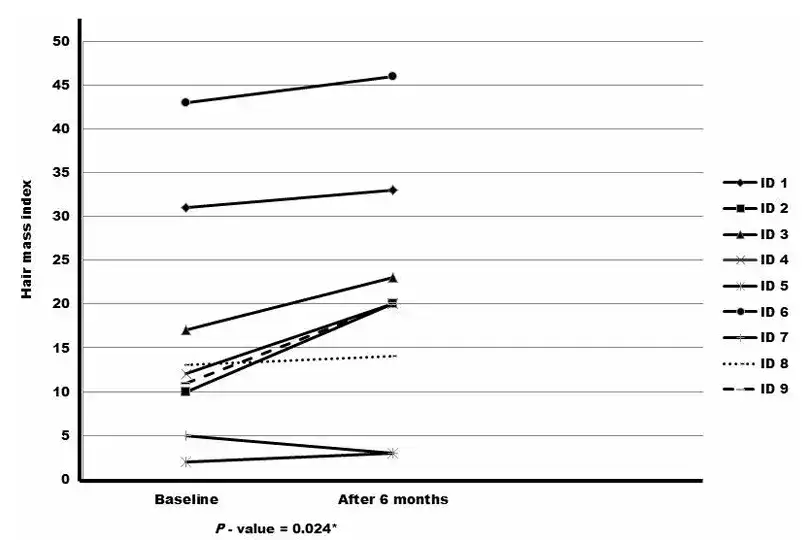
Hair mass index measurements also showed significant improvement six months after treatment. Researchers reported 26.4% improvement in hair mass index. Improvement was observed in all patients included in the study.
Most participants reported visible improvement in their hair growth and scalp appearance.
At 6 months after treatment:
Clinical photography also demonstrated visible improvement in many participants.
Platelet-rich plasma contains growth factors that may help:
These growth factors include:
The study discusses how PRP may promote hair follicle activity through multiple biological pathways.
The 1927nm thulium fractional laser creates controlled microscopic treatment zones in the scalp. Researchers believe this process may:
The study also referenced previous research showing that fractional laser treatments may stimulate hair growth through Wnt/beta-catenin signaling pathways.
Although the study showed promising results, researchers noted several limitations:
The authors concluded that larger randomized controlled trials are needed to further confirm the effectiveness of this treatment combination.
Although the study showed promising results, researchers noted several limitations:
The authors concluded that larger randomized controlled trials are needed to further confirm the effectiveness of this treatment combination.
Clinical research continues to support regenerative approaches for hair restoration, especially when combining multiple technologies such as PRP and fractional laser therapy.
Patients experiencing:
may benefit from non-surgical hair restoration approaches designed to stimulate natural hair growth.
At ParPar Medical Spa, we focus on advanced aesthetic and regenerative treatments tailored to each patient’s goals and hair restoration needs.
Multiple clinical studies suggest PRP may help improve hair density and hair thickness in patients with androgenetic alopecia by delivering growth factors directly to hair follicles.
Fractional laser hair restoration uses controlled laser energy to stimulate regenerative activity within the scalp and hair follicles.
Many hair restoration protocols involve a series of treatments spaced several weeks apart. Maintenance sessions may also be recommended depending on the patient.
Most patients tolerate PRP treatments well. Mild discomfort may occur during injections, but numbing options can help improve comfort.
Hair growth improvements are gradual. Many patients begin noticing visible changes within several months after treatment.
The KeraLase system combines the UltraLaseMD fractional laser with KeraFactor’s 7-growth-factor serum — stimulating dormant follicles and building real, measurable thickness. No needles. No downtime. Just results.

added to your account
when you connect with us